Humans teach.Machines learn.
The platform built for AI teams. This is where the teaching happens.

Backed by
Global platforms. MENA's flagship programs.
Annota8 is a portfolio company of MENA's accelerator programs and backed by global AI-platform grants. MISA licensed · 500 Global Sanabil cohort.
Live · The Foundation
Annotation Engine.
One engine for every way a human teaches a machine.
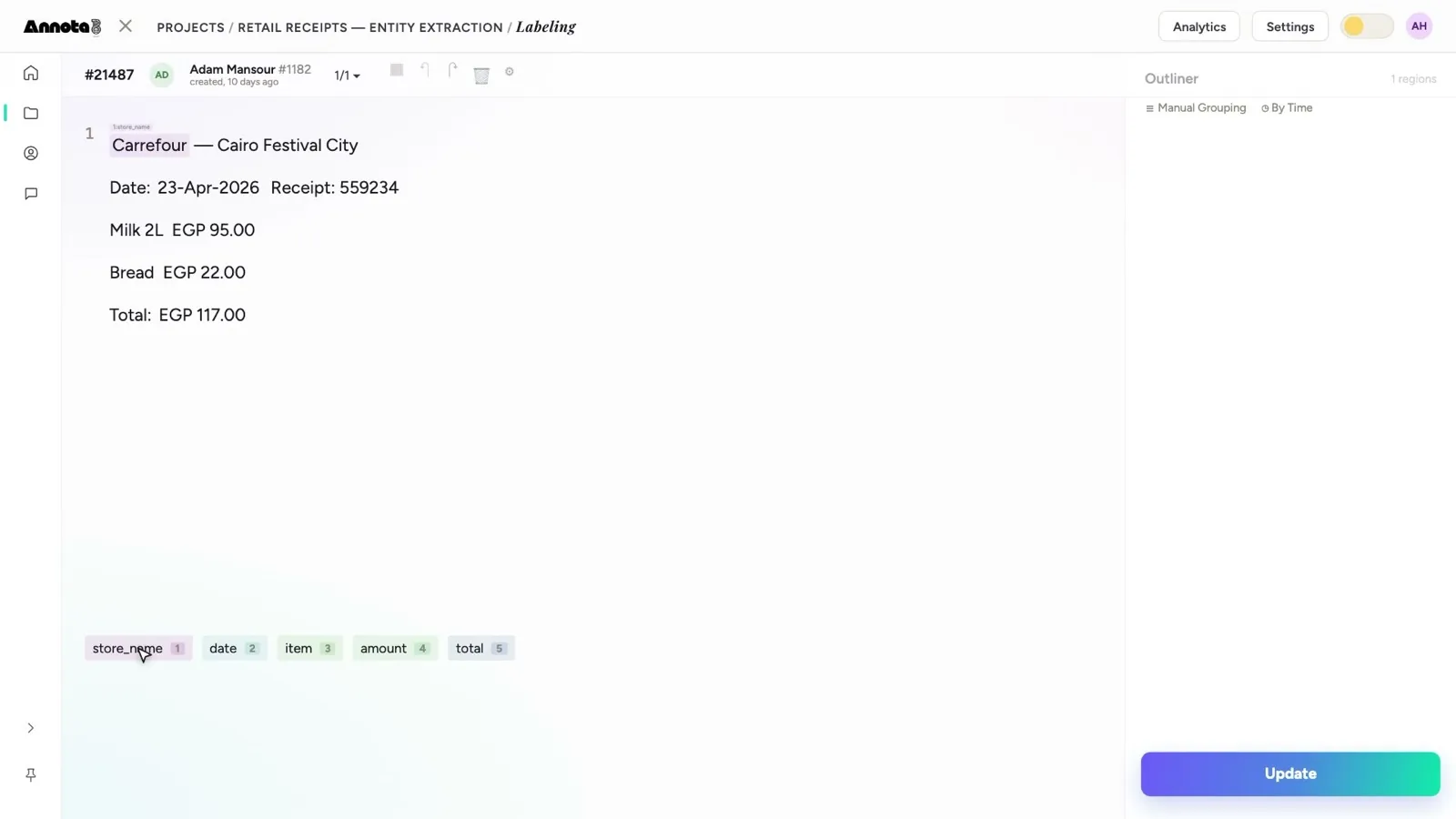
Every model that sees, reads, or hears learned it from a person — one box, one label, one transcription at a time. This is where that teaching happens: one UI library across every modality, so a human can show a machine the right answer in whatever form the answer takes. Fine-tune an LLM. Sharpen a vision model. Teach a new one from scratch — then keep teaching it after launch.
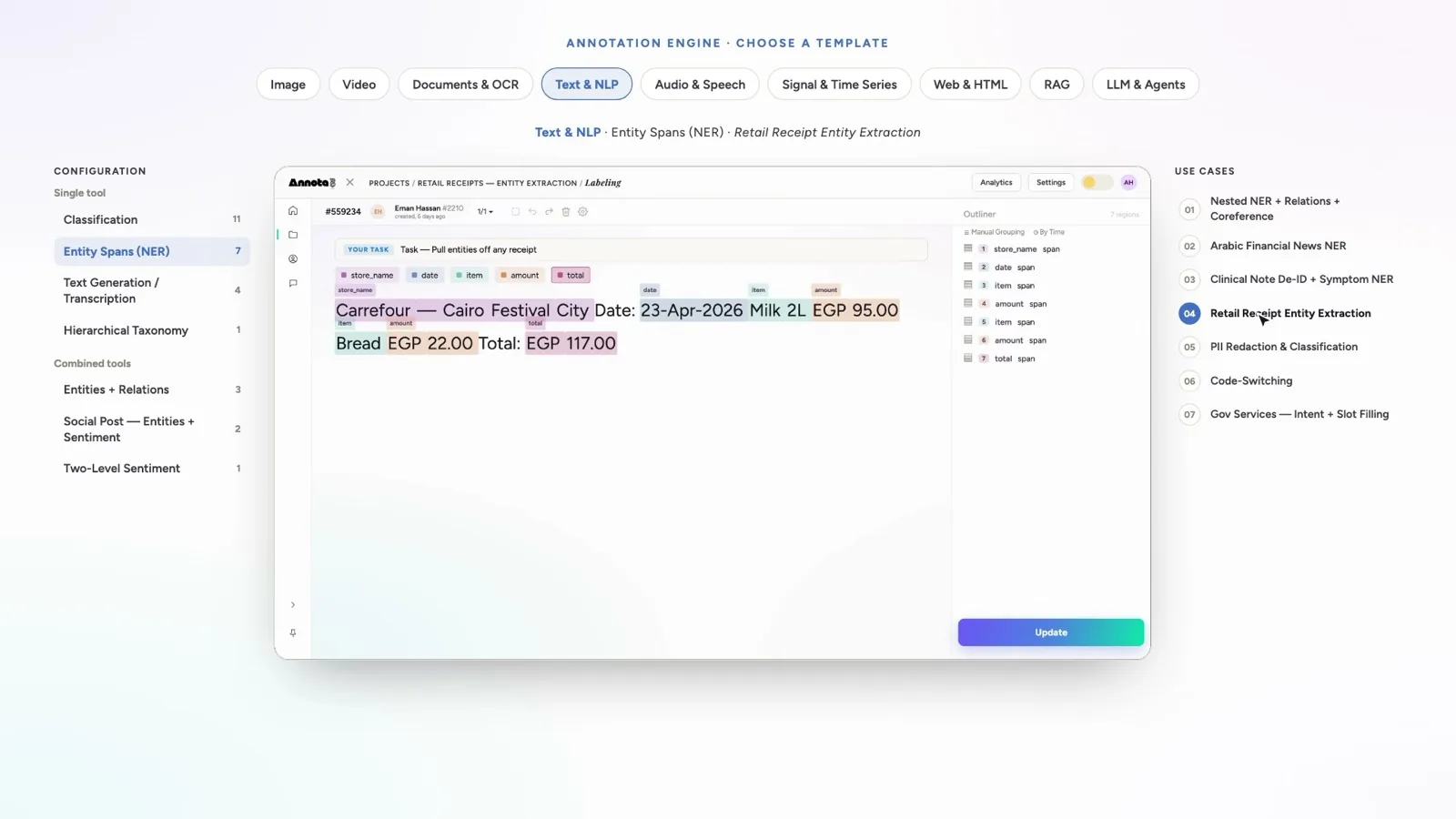
200 annotation UIs · 9 categories · one engine. Image · Video · Documents & OCR · Text & NLP · Audio & Speech · Signal & Time Series · Web & HTML · RAG · LLM & Agents.
Configuration
Pick a configuration to play all its use cases →
I'm working on…
Live · The Operating Layer
Run the whole operation in one console.
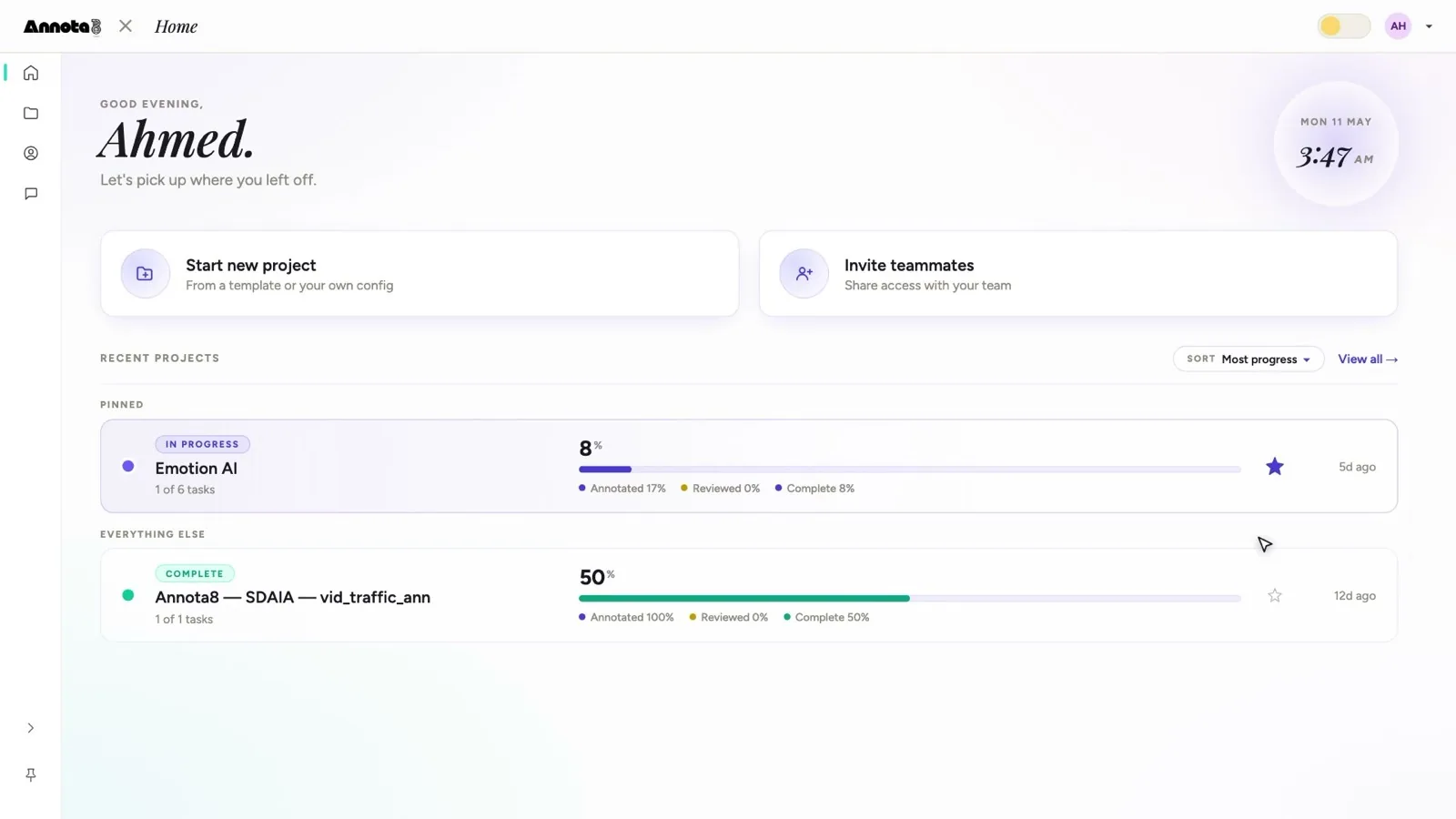
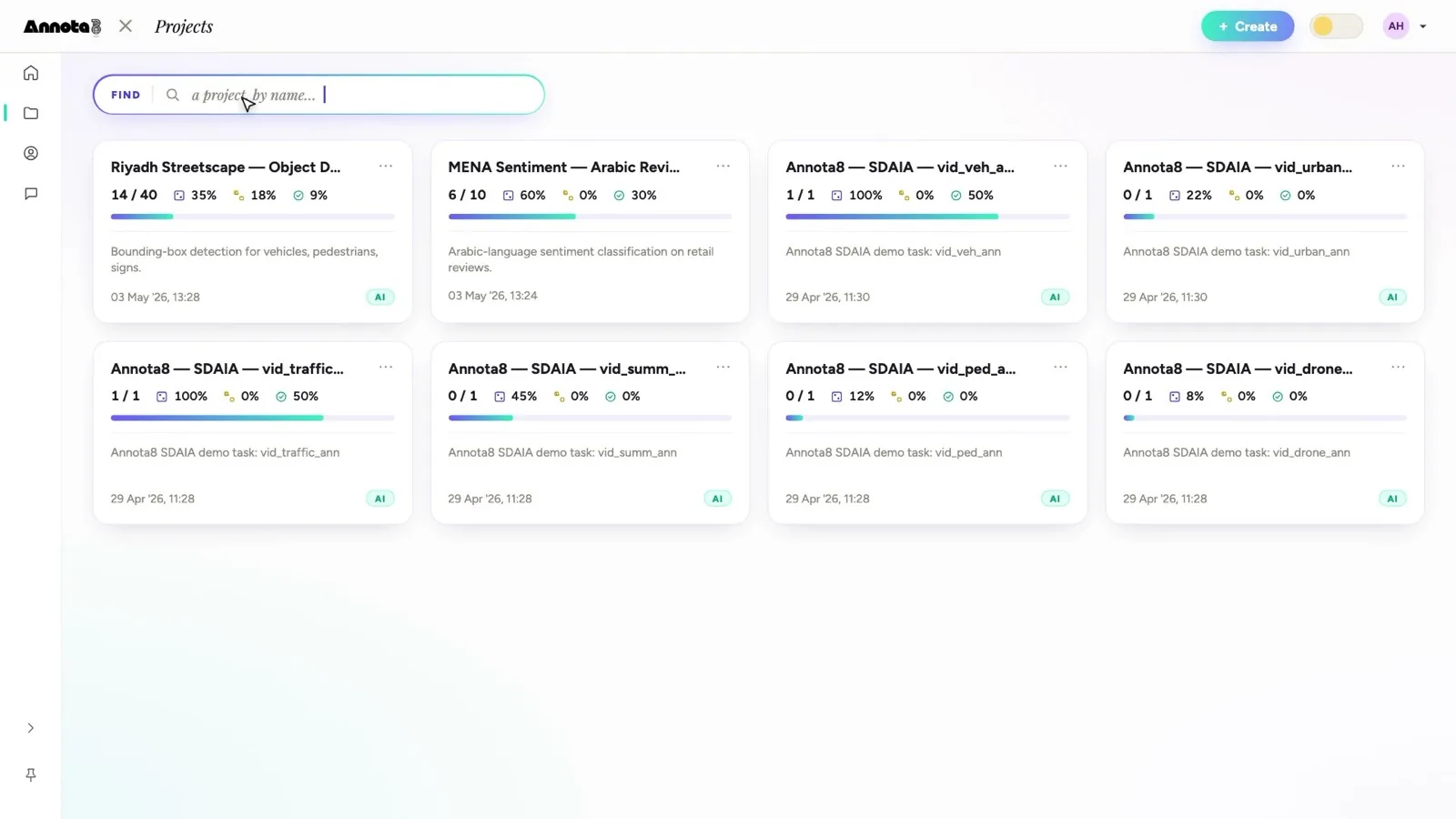
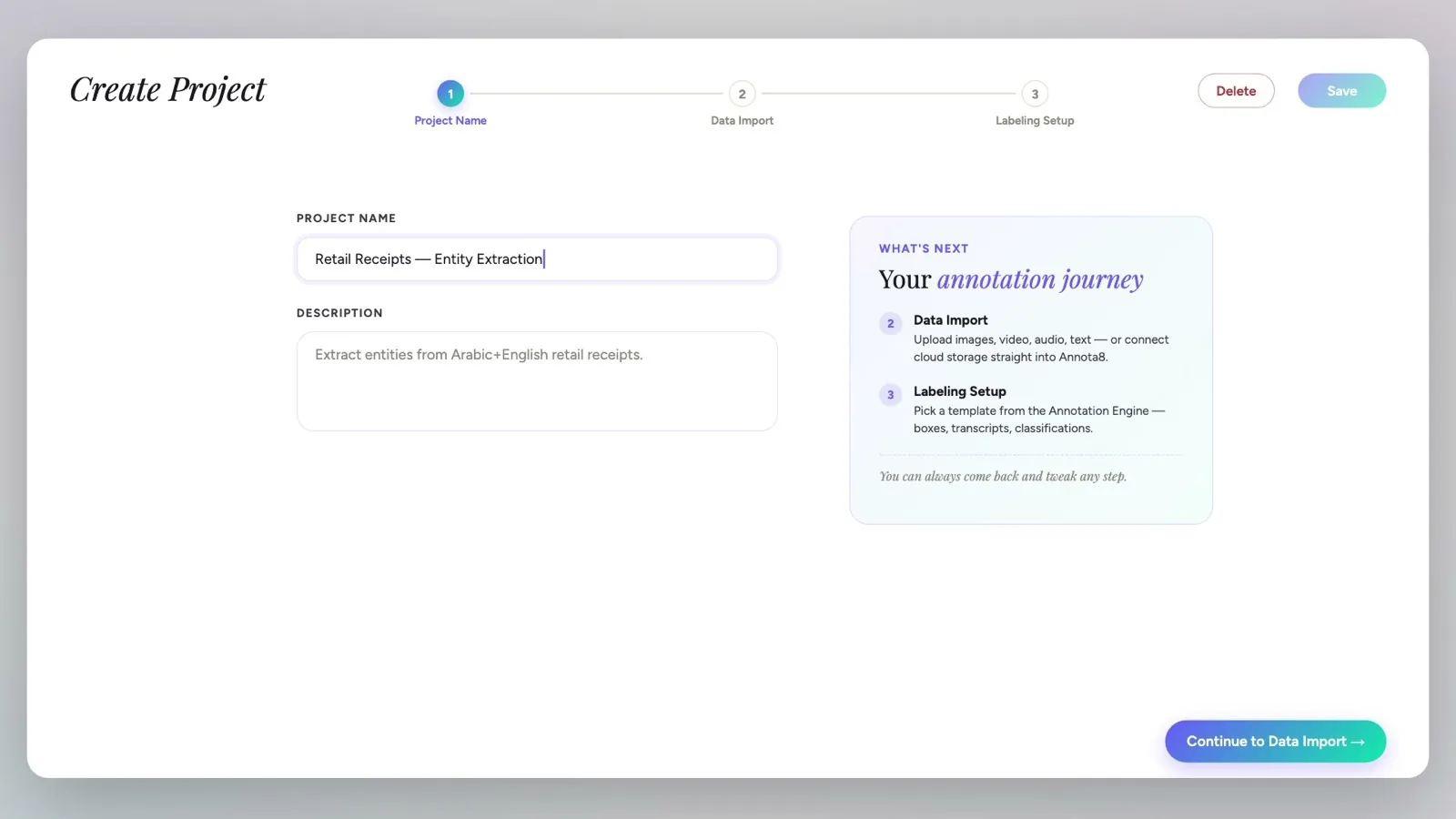
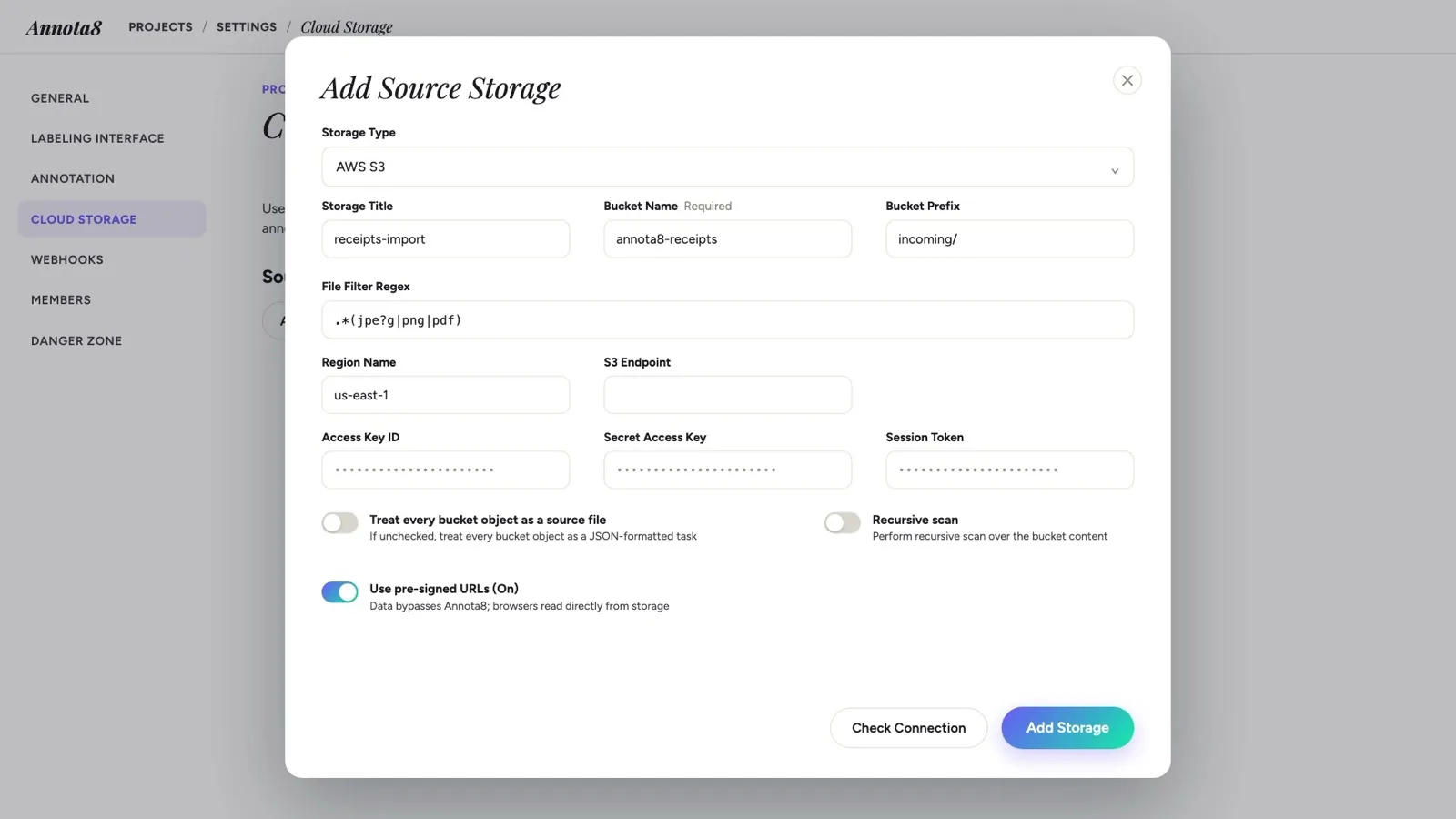
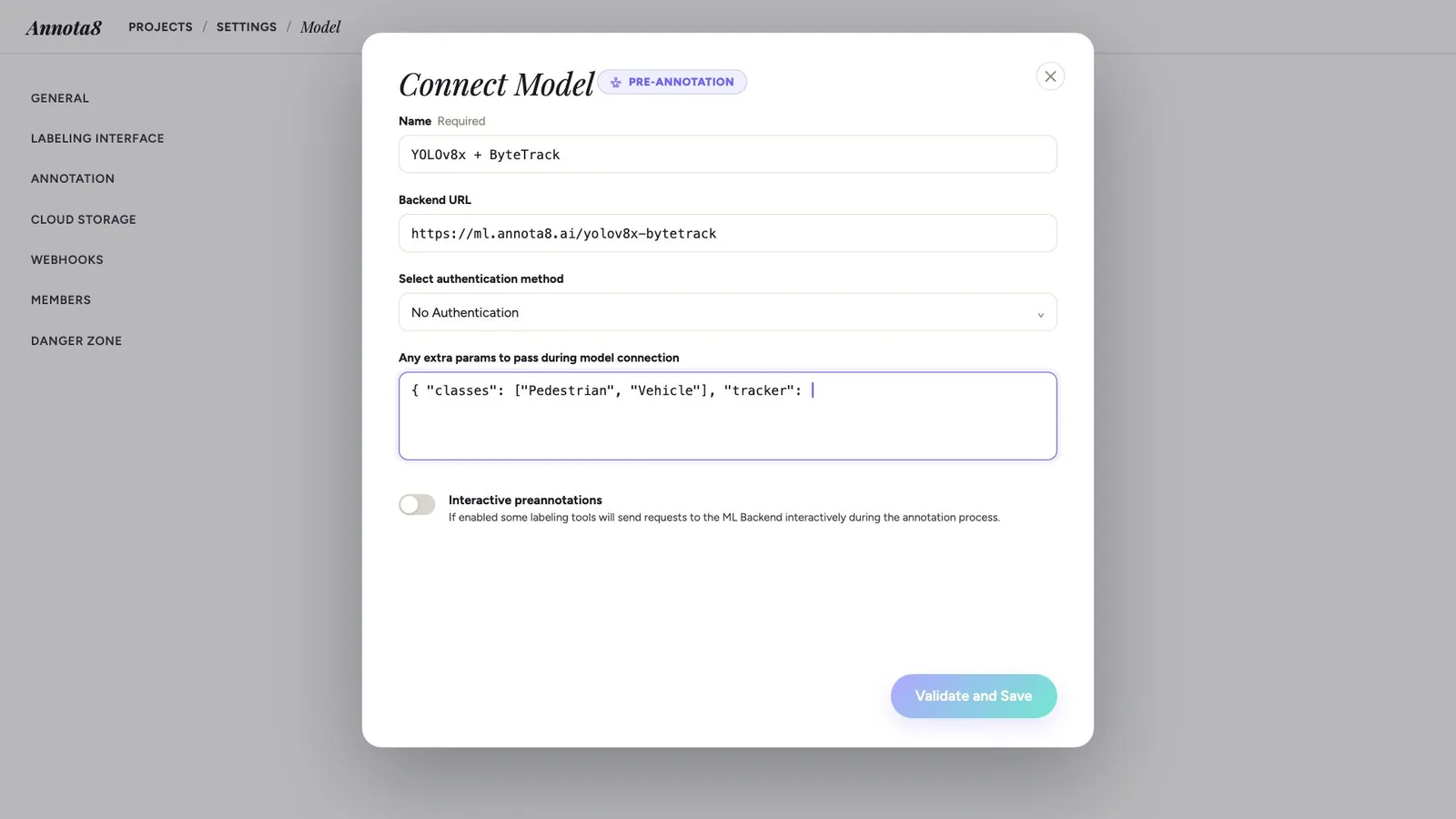
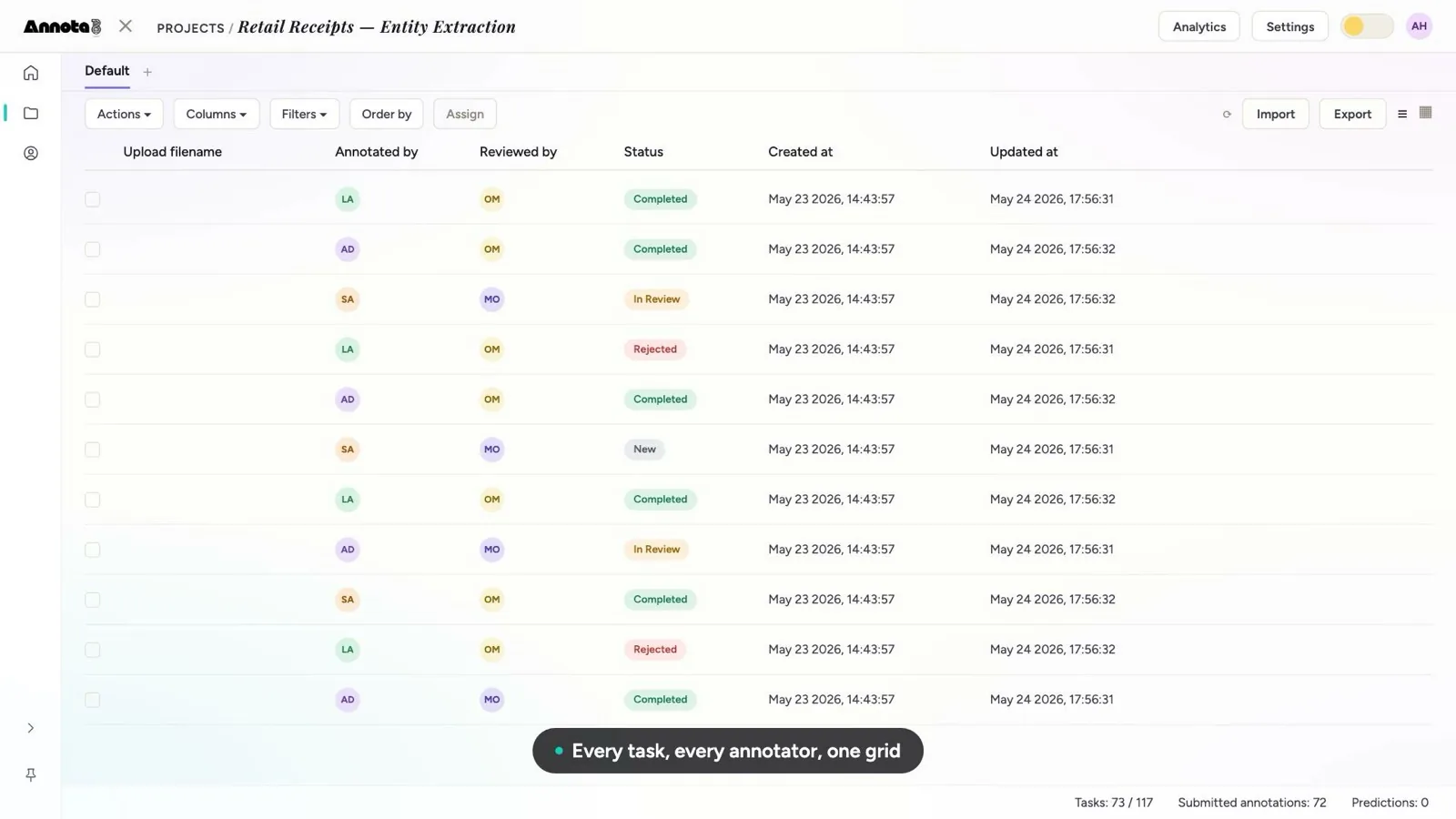
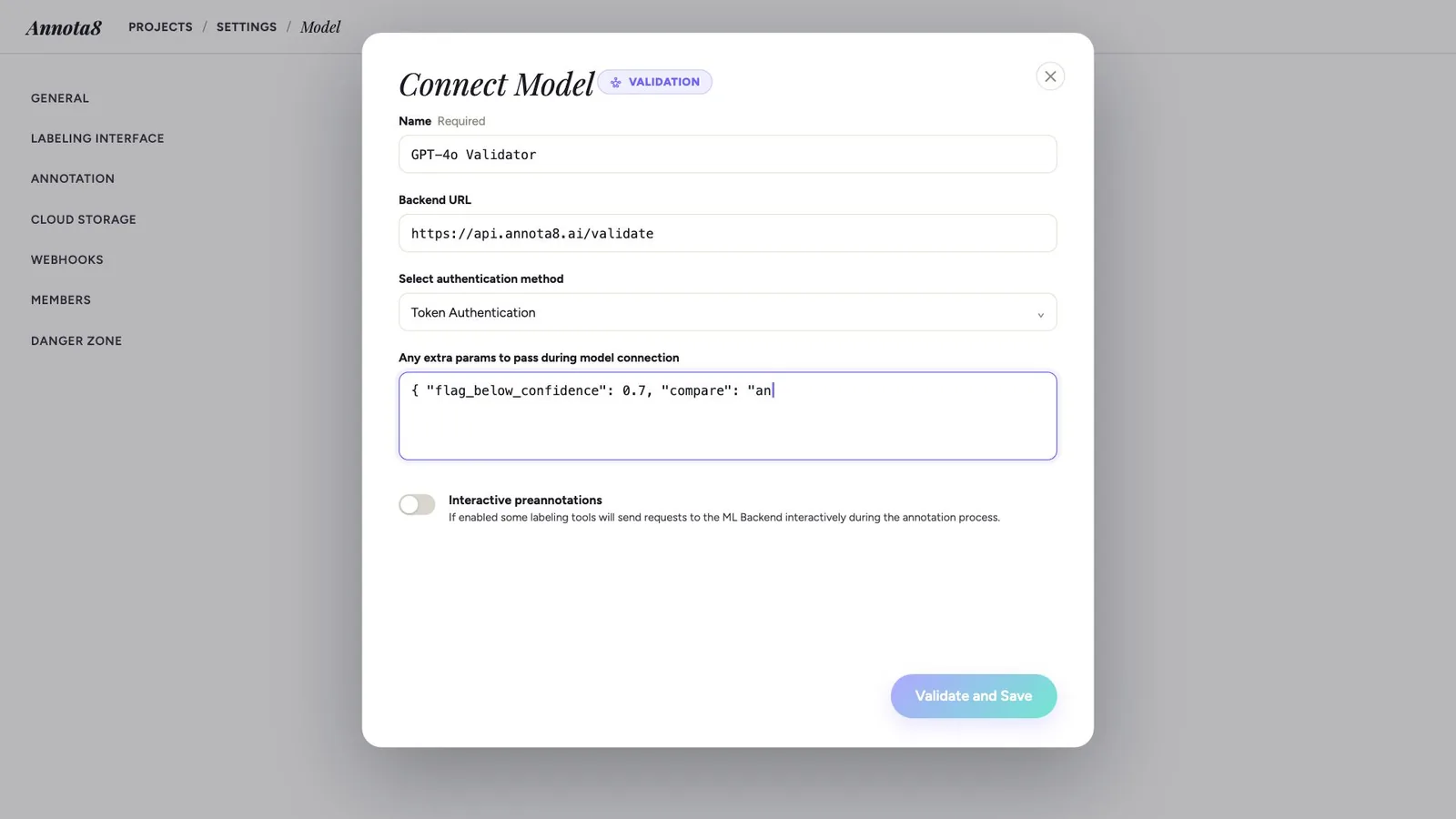
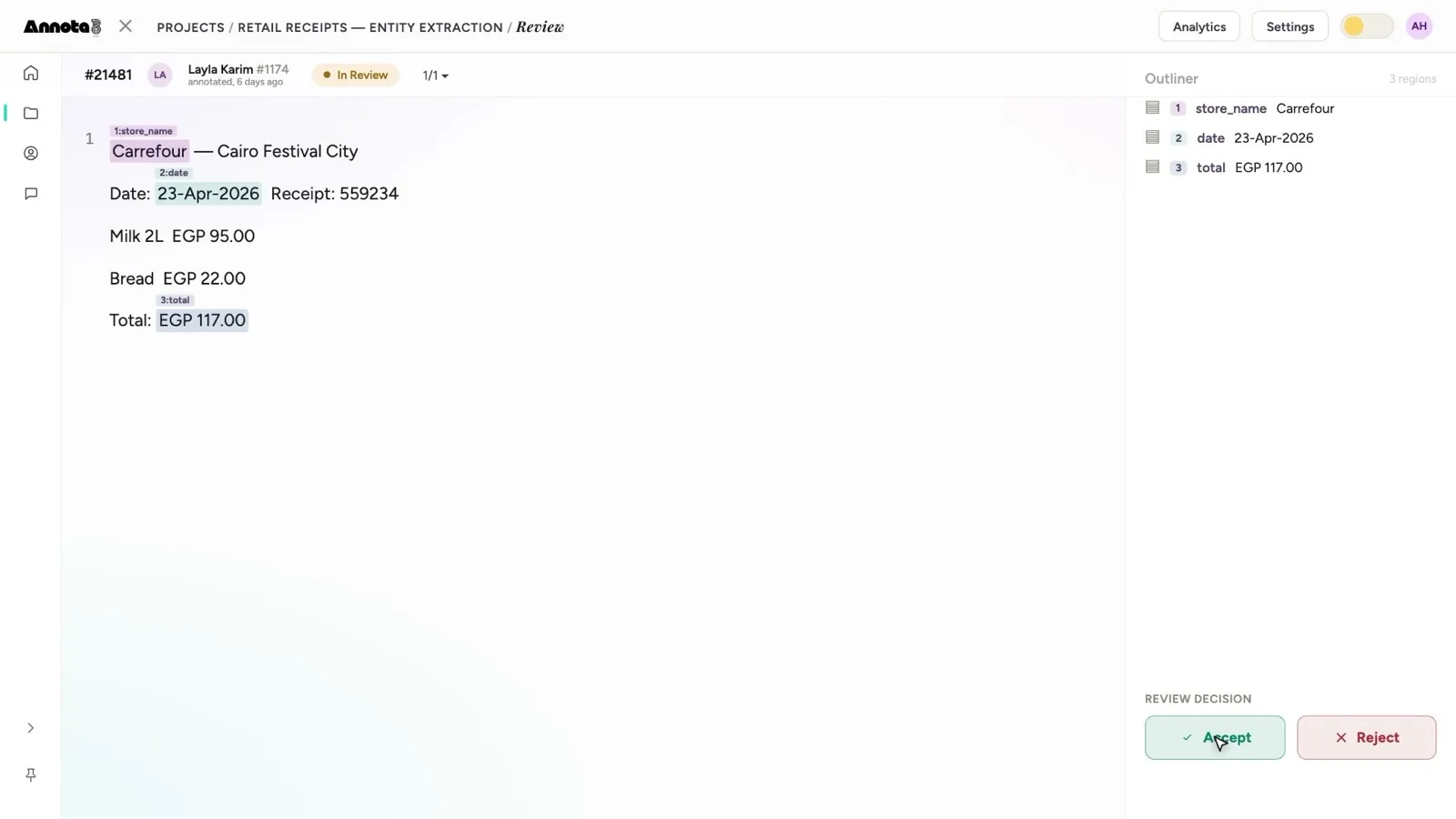
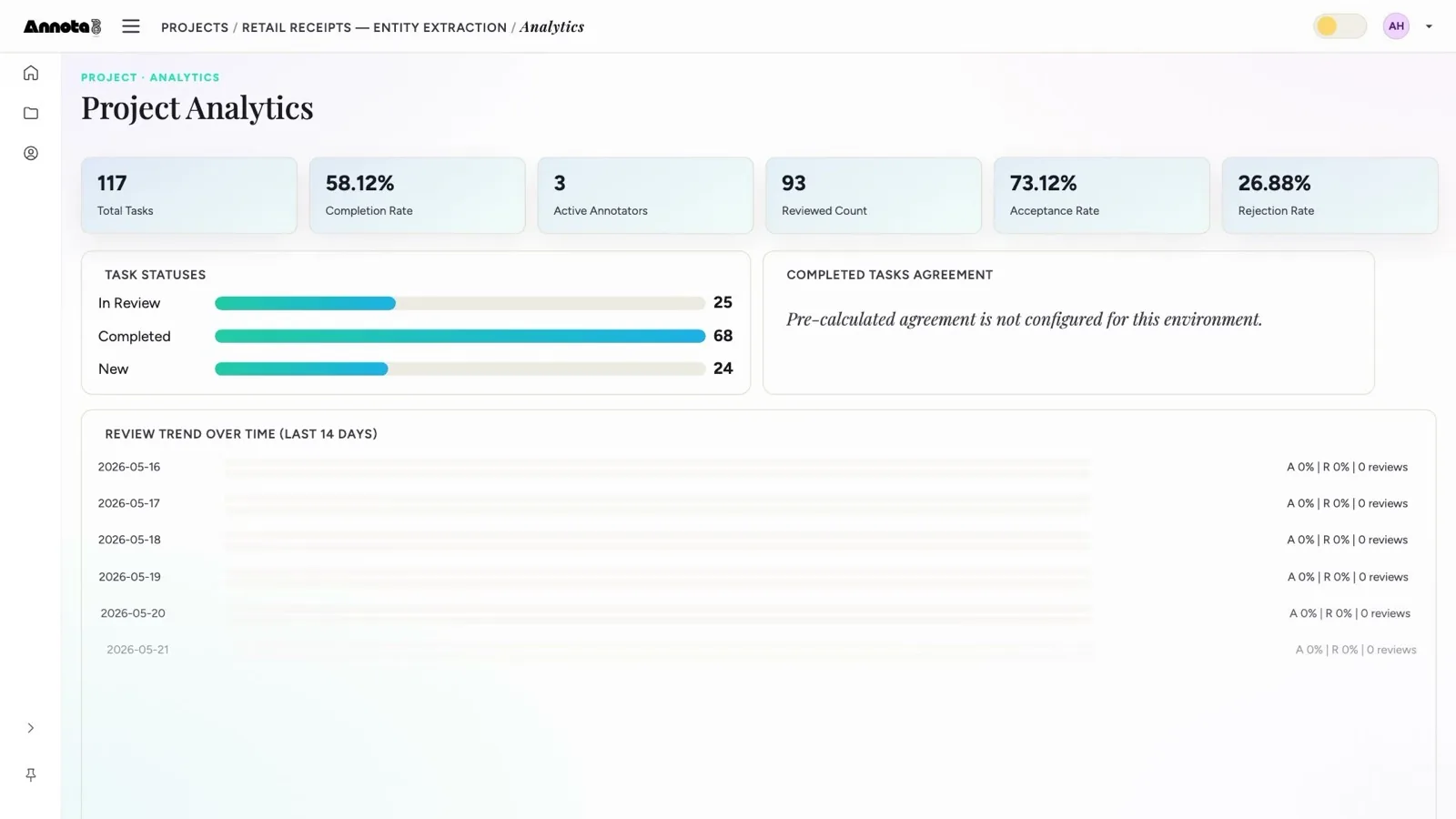
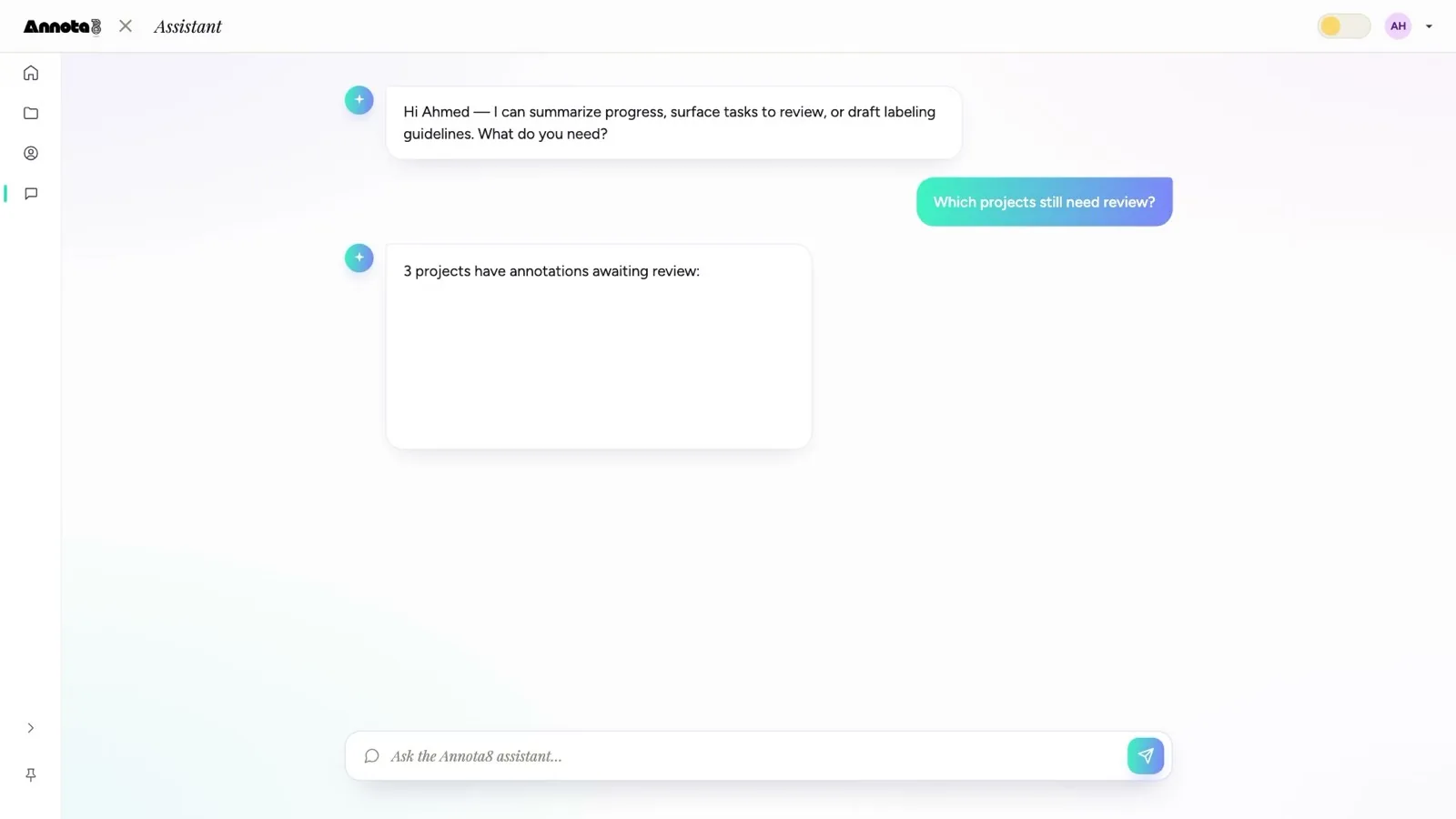
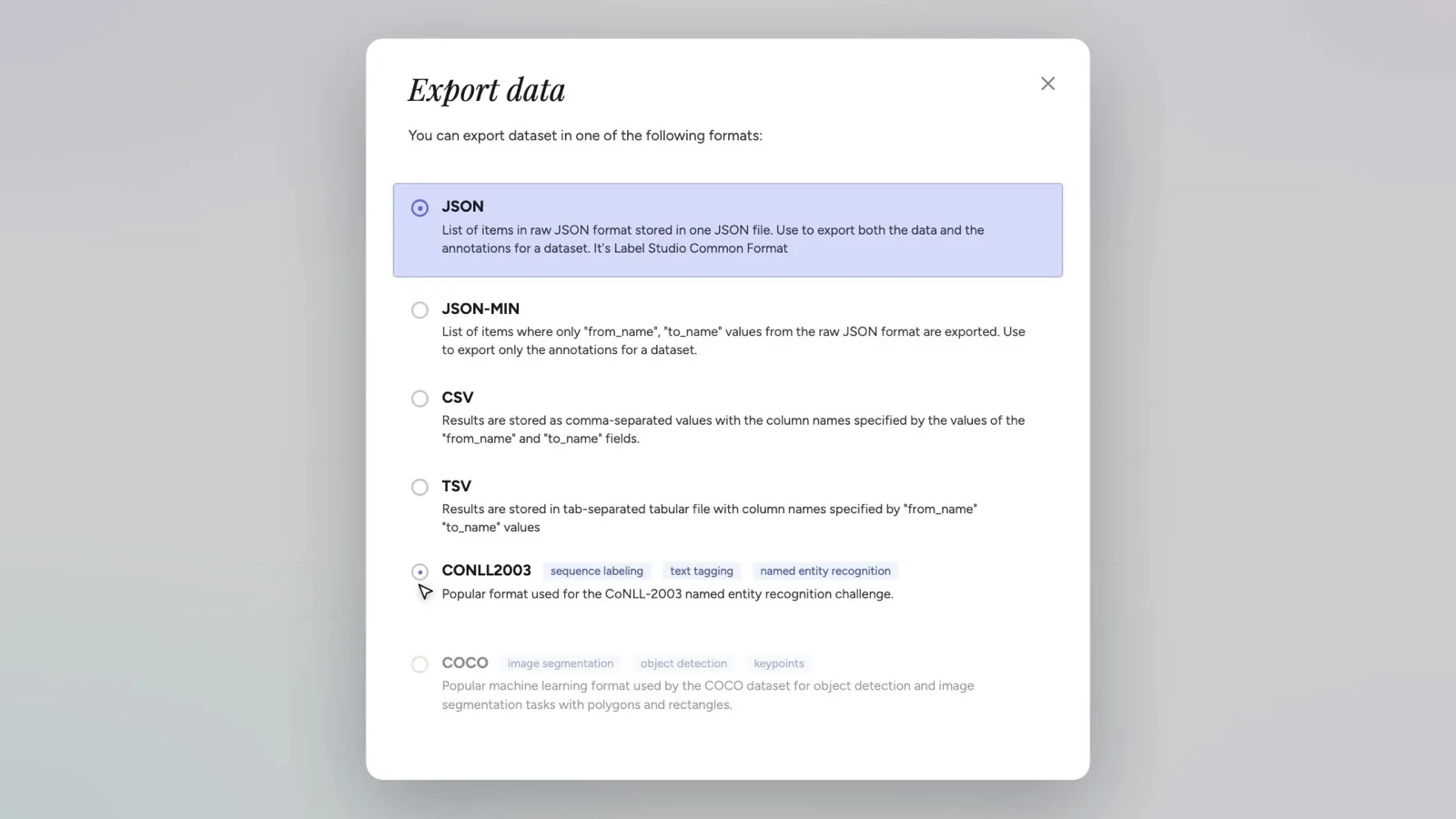
Spin up a project, assign the work, add a quality stage, then watch progress and agreement in real time — and export when it's done. One console, end to end. The Annota8 Agent is wired to all of it: ask in plain language, get the answer live. No merged spreadsheets. No status meetings. The old way staples three tools together and loses 60% to coordination and rework. Workforce and projects scale next.
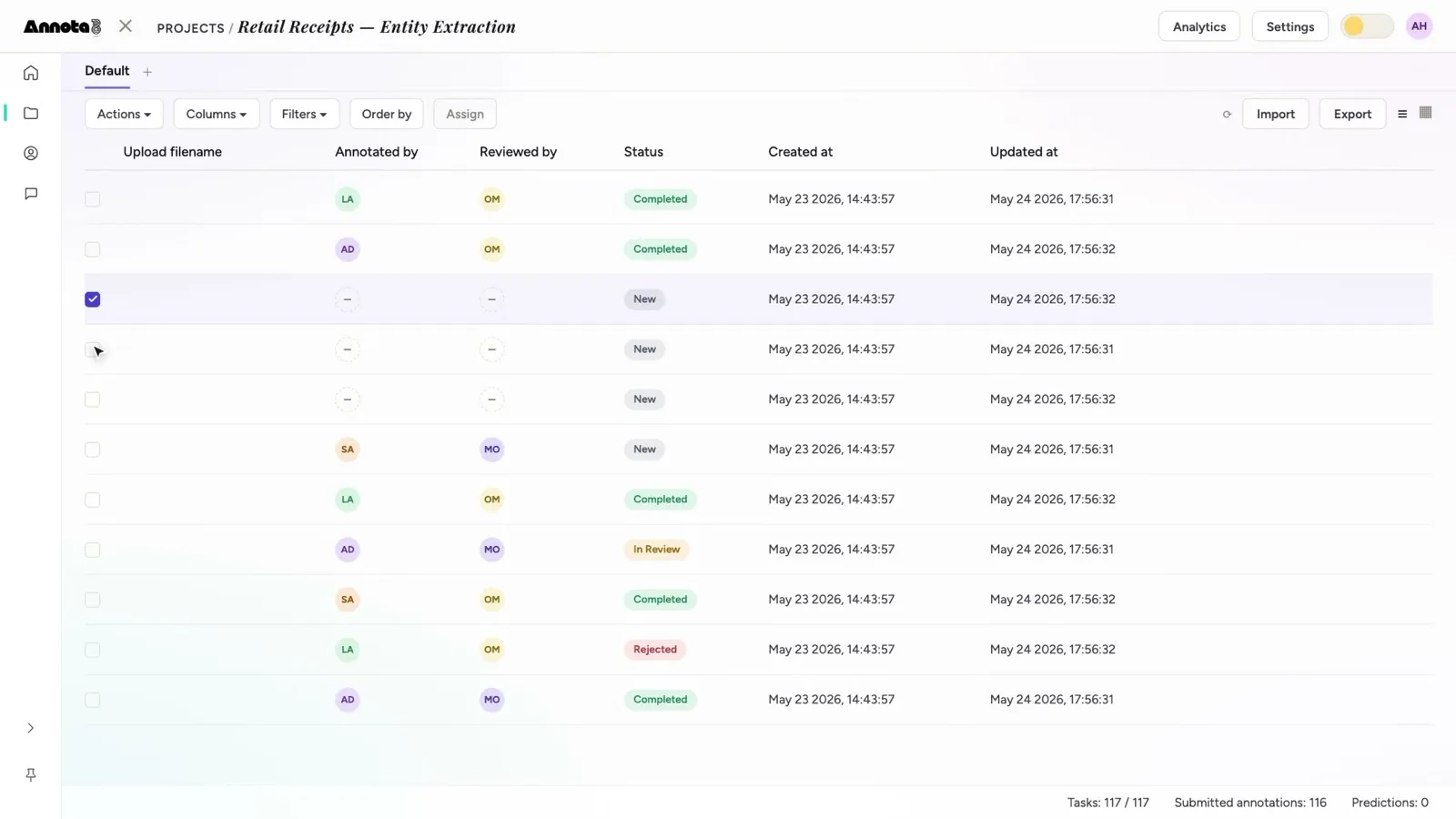
Live · a first of its kind
Annota8 Agent.
UIs alone don't ship AI.
First of its kind: a real analytics engine for annotation operations, built from ten years running production pipelines, now in Annota8. Ask it in plain language — one ask, one answer, for every role that keeps the operation running.
Use cases — pick one
The engine is live. Next, it scales.
Workforce Management ships next. Project Management follows. The autonomous A-to-Z Agent is the horizon — and the one we want your input on. Every early customer gets a seat at the roadmap table: feature requests that hit the floor, priority access to each module as it ships, and a direct line to the build team.
Coming to your instance.
The workforce layer.
Ships next. The workforce layer turns hiring, growth, and fairness from gut-feel into evidence. The best annotators rise because the system sees their work — not because their manager remembers their name.
Right task, right person, first time.
Tasks route by skill tier, domain, language, timezone — automatically. Every annotator carries a living skill matrix; every task carries a difficulty tier. The system matches the two so juniors learn, seniors are challenged, and your queue never stalls waiting for the one person who knows the schema.
The system spots the skill gap before the error.
Continuous tracking against every annotator's output. When a skill gap shows up in the data, the next training module is auto-suggested before the next bad batch ships. Lower turnover, higher quality, fewer awkward 1:1s.
Every QA note goes both ways.
Annotators rate reviewer feedback. Biased reviewers surface. Structured feedback schema + reviewer-performance dashboards mean annotators can appeal with evidence. Promote reviewers on track record, not politics.
The project console.
After the workforce layer ships. The project console turns capacity planning, SLAs, what-ifs, and budget forecasts into one live screen. The status deck stops being a Monday morning ritual and starts being the platform itself.
The platform IS the status deck.
Tasks remaining, accuracy trend, SLA risk, burn rate — one screen, always current. Stakeholders read the same numbers your floor reads. No reconciliation calls.
Say yes or no with numbers.
Stakeholder asks 'can we fit this 200K-task project?' — model it. Clone current state, apply the hypothetical, see the SLA risk and cost delta before you commit. Negotiate scope from data, not vibes.
Forecast the burn. Explain variance before it happens.
Per-project and per-portfolio budget tracking. Burn-rate projections, cost-per-task trends, forecast vs actual. CFOs read the same numbers ops manages from.
The Annota8 Agent.
On the horizon. The Agent starts as a co-pilot inside every stage and grows into an autopilot that runs the pipeline end-to-end. This is where the operation stops needing a manager to keep it moving.
Buy back reviewer hours.
Your reviewers spend ~40% of their time on tasks that aren't borderline. The Agent pre-screens low-confidence work and flags disagreements so reviewers only see the edge cases. Throughput up, fatigue down, accuracy steady.
Tasks find the right person without a human dispatcher.
The Agent watches skill, fatigue, queue depth, deadline pressure — and routes the next task to the annotator most likely to finish it correctly the first time. The dispatcher role disappears into the platform.
Hand off the operation. Keep the strategy.
Give Annota8 a contract and a dataset. Get a managed pipeline back. End-to-end orchestration across annotation, workforce, and project layers. Goal-setting UI, auto-allocation, auto-QA, auto-reporting. You set outcomes; the operation runs itself.
Live customer · United States
We started at the University of California, San Diego.
Not a free pilot on a side project.
The University of California, San Diego — its Halıcıoğlu Data Science Institute and Department of Cognitive Science — is a paying customer. We started where the bar is highest: a leading US research university, with an engine built by a team that ran annotation operations at scale for a decade. We're Arabic-first and built in Saudi Arabia — for the labs teaching frontier AI anywhere.


The template library
The canvas is already built.
200 annotation UIs, recorded from the real console. Pick the task that looks like yours — start in minutes, not months. Your AI is only as good as the people who taught it. LIVE
Live · FAQ
Data annotation, answered.
The questions we actually get.
What is data annotation?
Data annotation is the human work of labeling data — drawing boxes, transcribing speech, ranking model answers — so an AI model can learn from examples. Every model that sees, reads, or hears learned it from a person. Quality in, quality out: your AI is only as good as the people who taught it.
What is the Annota8 Annotation Engine?
One annotation platform with 200 annotation UIs across 9 data modalities — Image, Video, Documents & OCR, Text & NLP, Audio & Speech, Signal & Time Series, Web & HTML, RAG, and LLM & Agents. Pick the UI that matches your task and start in minutes — then run assignment, quality, and progress in one console.
Does Annota8 support Arabic data annotation?
Yes — Annota8 is Arabic-first and built in Saudi Arabia. The platform and its annotation UIs run in Arabic and English, so teams label Arabic text, speech, and documents with native workflows instead of retrofitted translations.
Can Annota8 handle RLHF and LLM evaluation?
Yes. The engine includes dedicated UIs for LLM and agent work — side-by-side response ranking (RLHF), RAG evaluation, prompt-and-response review, and agent-trace evaluation — alongside the classic vision, document, and audio tasks.
Who uses Annota8?
AI and ML teams that need reliable human-labeled data. The University of California, San Diego — its Halıcıoğlu Data Science Institute and Department of Cognitive Science — is a paying customer, and we work with teams across Saudi Arabia and the GCC.
How is Annota8 different from other annotation tools?
The team spent a decade running annotation operations inside companies training today's AI — as the customer, evaluating 100+ tools and workforces. Annota8 is what that experience says the tool should have been: 200 UIs, one operating console, and an AI agent wired to your annotation data.
How do I get started?
Book a 30-minute demo at annota8.ai/book — bring your data problem and we map it on the Annotation Engine, live. No slides, no obligation.